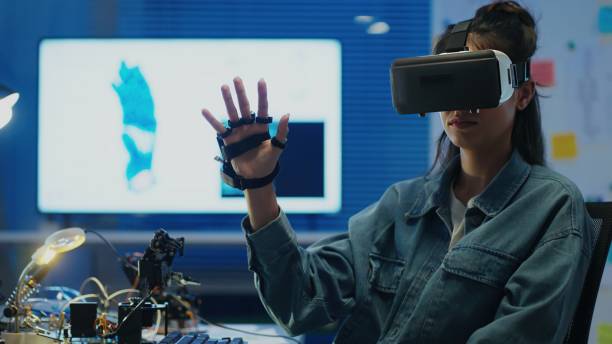
For years, VR has been a visual trick. You put on a headset, see a new world, and wave controllers around. It’s fun, but your hands still feel like they’re holding plastic wands. AR has the same problem. Digital objects appear in your room, but you can’t feel their weight or texture. Haptic feedback is changing that. Instead of just seeing virtual worlds, you start to feel them. The most interesting cutting-edge gear right now is haptic gloves, wristbands, and vests, and they’re getting closer to something normal people can use.
Haptic gloves are exactly what they sound like: gloves with tiny motors, air bladders, or electrical stimulators that push, buzz, or squeeze your fingers and palms. High-end models can stop your fingers from closing around a virtual cup, making it feel solid. That tiny bit of resistance is often enough to make the virtual world feel less like a cartoon. Others create a light tickle to simulate a butterfly landing or a rough surface. If your brain sees your hand touch a virtual object and feels nothing, the illusion breaks. Add even a small amount of haptic feedback, and your brain fills in the rest. You don’t need perfect simulation; you need enough to keep the story going.
Today’s options fall into a few rough groups. Simple haptic gloves for VR gaming are affordable, comfortable enough for an hour, and work with major headsets through SteamVR or OpenXR. Premium gloves for training, design, and medical simulation can cost as much as a laptop and may require base stations or a PC. In between, wristbands use electrical muscle stimulation to make your hand feel like it’s pushing against something without covering your fingers. That’s great for AR, because you can still see your real hands. Haptic vests let you feel a punch, a hug, or a racing heartbeat across your torso. Combine a vest with a headset and controllers, and games stop feeling like a screen strapped to your face.
For non-technical buyers, compatibility is the boring part that matters most. Check what headset you own, not what looks cool in a demo. Many haptic devices need a PC, not a standalone headset like a Quest. Battery life is another reality check. A glove that lasts ninety minutes is fine for a demo, less fine for a movie night. Comfort matters too. If the glove pinches between your fingers or gets sweaty after twenty minutes, you won’t use it. Look for adjustable straps, breathable fabric, and washable liners. If you wear glasses or have larger hands, read return policies before committing.
The best way to start is not to buy the most expensive gear. Start with a haptic vest or wristbands if you already have a headset. They’re easier to share and often cheaper than full gloves. A vest gives instant feedback that friends can understand in seconds. If you’re into design, 3D modeling, or training simulations, gloves make more sense because precise finger tracking changes how you work. For AR, wrist-based feedback is often the smarter choice. It keeps your hands free and doesn’t block cameras.
Content creators should pay attention because haptics change what you can make. A virtual tour can include the rumble of a train. A cooking demo can let viewers feel the weight of a pan. A game can use touch as a puzzle clue. You don’t need a full body suit. A single haptic event, timed well, can be more memorable than a dozen visual effects. Use feedback to support the moment, not to show off the hardware.
Prices are still high, standards are still messy, and the best gear is often aimed at businesses. But that’s how every peripheral starts. Haptic gloves and wearables are following the same path as game controllers and wireless mice. If you’re curious, try a demo at a VR arcade, a friend’s setup, or a store that allows returns. Watch for open standards like OpenXR, which will make devices work together without a pile of adapters. The future of VR and AR isn’t just about sharper screens. It’s about reaching out and feeling something reach back.