A comfortable desk is less about buying a matching furniture set and more about lining up your body with your gear. You can spend a fortune on an ergonomic chair and still ache if your monitor sits too low or your keyboard is too far away. The good news is that most home desk fixes are cheap, reversible, and a little bit nerdy in the best way. Start with how you actually sit, then adjust the stuff around you. Your body is the priority, not the furniture catalog.
Begin with the chair you already own. Plant both feet on the floor. If they do not reach, use a sturdy box, a stack of old textbooks, or a proper footrest. Your knees should bend around ninety degrees, and your thighs should be roughly level with the floor. If your chair has a backrest, adjust it so it supports the curve of your lower back rather than pushing your shoulders forward. A rolled-up towel or small cushion behind the lower back can do wonders. If your chair is too low for the desk, raise the chair and fix the foot support. If it is too high, lower it and see whether your desk still works. Do not force your body to fit bad furniture when a cushion or box can fill the gap.
Next, deal with your screen. The top of the monitor should sit roughly at eye level, and the screen should be about an arm’s length away. If you use a laptop all day, you already know the problem: the screen is too low and the keyboard is too close. A laptop stand plus an external keyboard and mouse is the classic fix, and it does not need to be fancy. A stack of books under the laptop works for a test. Once you know the height, a simple stand or even a small shelf can make the setup permanent. If you wear glasses, especially progressives, test the height with your actual glasses on. The goal is a neutral neck, not a chin-up posture that makes you feel like you are watching a parade.
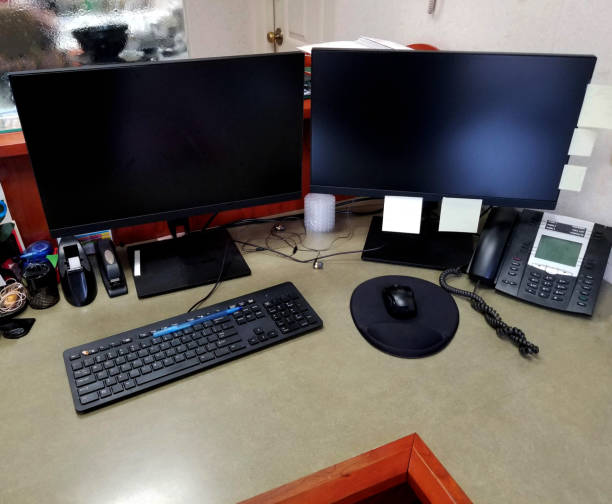
Keyboard and mouse position matter more than most people expect. Your elbows should stay close to your sides, with a soft bend at about ninety degrees. The keyboard should be close enough that you are not reaching, and the mouse should sit beside it, not across the desk. If your shoulders creep up, your desk is probably too high or your keyboard is too far forward. A keyboard tray can help, but it is not mandatory. Sometimes lowering the desk, raising the chair, and adding a footrest solves the whole puzzle. Keep your wrists straight and relaxed. If your wrists bend upward all day, a wrist rest or a slightly negative keyboard tilt may help, but do not press your wrists into a hard edge.
Lighting is part of comfort, even if it feels less technical. Put your monitor so that bright windows are not directly behind it or directly in front of you. Glare makes you lean forward and squint, which undoes your careful screen height. A desk lamp with a warm-to-neutral setting can reduce eye strain in the evening. Keep the light source off to the side if possible so it does not reflect straight into your eyes. If your eyes feel tired by mid-afternoon, try the 20-20-20 habit: every twenty minutes, look at something twenty feet away for twenty seconds. It sounds too simple to matter, but it gives your focusing muscles a break.
Do not ignore the small stuff. Keep often-used items within easy reach so you are not twisting or stretching all day. Route cables so they do not pull on your devices or catch your feet. Give yourself enough desk depth to rest your forearms without hunching. If your desk is shallow, a clamp-on keyboard tray or a smaller keyboard can buy back space. If noise drains your focus, try soft earplugs or a pair of comfortable headphones rather than turning up the volume on everything else. Comfort is not just posture. It is temperature, noise, clutter, and how often you move.
Finally, get up. No perfect setup cancels out sitting still for three hours. Stand, stretch, refill your water, and let your shoulders drop. A kitchen timer, a watch reminder, or a simple habit after every meeting can work. Make the setup fit you, then make movement part of the routine. That combination is what turns a desk from a place where you endure work into a place where you can actually focus.