There is a specific kind of magic that has been lost in the transition from physical media to the invisible cloud. We live in an era where music is everywhere and nowhere at once. It exists as data, streaming through the air, occupying no space and requiring no effort to access. But for those of us who grew up in the era of dials, buttons, and skipping tracks, the tactile relationship we had with our music is something we secretly miss. This is the story of the portable CD player, a device that was once the pinnacle of mobile audio technology and now sits as a relic of a more intentional time.
To understand the appeal of the portable CD player, you have to understand the physics of the machine. Unlike the modern smartphone, which is essentially a sealed glass slate, a CD player was a mechanical wonder. It had a lid that popped open with a satisfying spring-loaded click. It had a laser eye that moved on a track, reading microscopic bumps on a piece of spinning polycarbonate. When you held one, you felt the weight of the batteries. You felt the motor spin up. It was a machine in the truest sense, and interacting with it was a physical ritual.
The experience of listening to music on one of these devices was defined by its limitations. You could not fit your entire library in your pocket. You had to choose. This forced a level of intentionality that is rare today. If you were going on a long car ride, you had to pack a binder of CDs. That binder was heavy, and the zippers were always threatening to break, but it was your library. You had to decide in advance what mood you wanted to be in three hours from now. You had to curate. When you swapped a disc, you were making a deliberate choice to change the atmosphere of your environment.
Then there was the buffer. The dreaded skip. We take for granted that digital audio today is solid-state and skip-free. But the portable CD player relied on a moving laser and a spinning disc. If you jogged too hard, the music would stutter. This gave birth to a specific subculture of anti-shock technology. We marveled at the “ESP” or “Electronic Skip Protection” buttons, which would buffer seconds of audio into memory so you could walk briskly without the music cutting out. It was a battle between physics and convenience, and for a long time, the physics were winning.
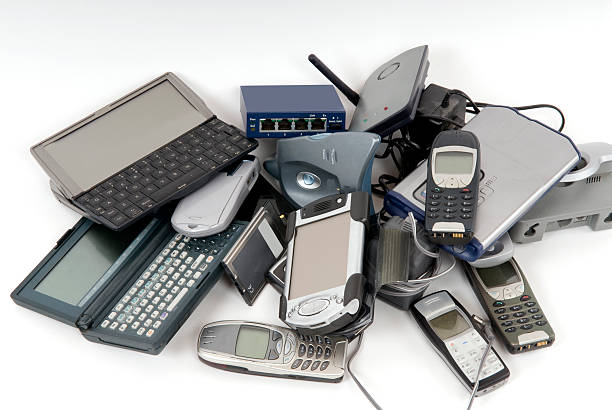
Despite the bulk and the fragility, or perhaps because of it, these devices hold a special place in the hearts of retro enthusiasts. There is a reason why the metallic sheen of a late-nineties Sony Discman commands high prices on auction sites today. It is not just about nostalgia for the music; it is nostalgia for the object. It is a rejection of the ephemeral nature of digital files. A CD player requires you to be present. You cannot just let it play in the background of your life without interacting with it. You have to feed it. You have to clean the lens. You have to treat it with a modicum of respect.
For the modern content creator or gamer, there is a lesson here about aesthetic and focus. We spend thousands of dollars on mechanical keyboards and high-end mice because we crave that tactile feedback. We want to feel the click. The portable CD player offers that same tactile satisfaction for audio. Using one today is a statement. It says that you value the ritual of listening. It says that you are willing to trade the convenience of infinite skip-free playlists for the charm of a device that has weight, history, and a soul.
If you are looking to dip your toes into the world of retro audio peripherals, you do not need to spend a fortune. Thrift stores and online marketplaces are full of these devices waiting for a second life. Grab a few of your favorite albums on disc, find a quiet spot, and hit play. Listen to the mechanical whir. Listen to the slight hum of the motor. It might not have the fidelity of a modern lossless stream, but it has something else. It has character. It has the sound of a time when technology was something you held in your hands, not something that floated invisibly around you.