There’s a reason people get misty-eyed about old keyboards. The best ones from the 1980s and 1990s didn’t just sit on a desk. They announced themselves. They clacked. They thocked. They had thick plastic cases, long cords, and keys that felt like they meant something. For anyone who grew up typing on a family computer, a school lab machine, or an early office PC, that sound and feel are burned into memory. Modern laptops are thin, quiet, and efficient, but they rarely feel memorable. That gap is exactly why retro-style mechanical keyboards have become one of the most popular throwback peripherals. They give you the look and sound of the past without forcing you to hunt down a dusty machine from a garage sale.
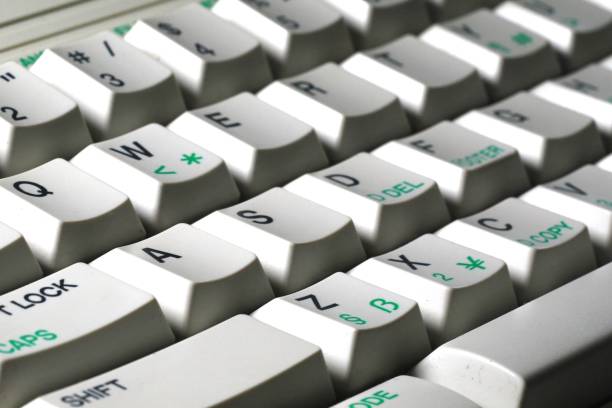
The classic example is the IBM Model M, the buckling-spring keyboard that helped define personal computing. It was heavy, loud, and nearly indestructible. Then there were Apple Extended Keyboards, Commodore machines, and countless beige clone boards that shipped with PCs. These keyboards were built to survive. Keys could be popped off and cleaned. Cords could be replaced. Cases could be opened. Many of them still work today, which is more than you can say for a lot of modern gadgets. That repairability is a big part of the nostalgia. People miss products that felt like tools, not sealed disposable slabs.
Modern reissues and retro-inspired keyboards take that feeling and update it for current computers. Some are official revivals or close cousins of old designs, like new buckling-spring boards that mimic the Model M’s personality. Others are fresh mechanical keyboards dressed in retro clothing: beige and grey keycaps, chunky bezels, old-school legends, and maybe a little orange or red accent. Under the surface, though, they are pure modern convenience. You get USB-C, Bluetooth, wireless modes, media keys, and software that lets you remap almost anything. The nostalgia is in the style and feel, but the daily usability is current.
For non-technical buyers, the important thing is that you do not need to understand every spec to enjoy one. Mechanical switches come in three basic flavors. Linear switches are smooth and quiet-ish. Tactile switches have a bump you can feel. Clicky switches make the loud, satisfying noise many people associate with old keyboards. If you want the retro experience, clicky or tactile is usually the place to start. If you share a room or office, be honest about the noise. A clicky keyboard can be delightful to you and maddening to everyone else. Many modern boards let you swap switches without soldering, so you can change your mind later.
The retro keyboard revival is also about personalization. Old keyboards were not very customizable, unless you counted swapping keycaps from another machine. Today, you can choose a layout that fits your desk, from full-size with a number pad to compact 75 percent or tenkeyless designs that leave more room for a mouse. You can pick keycaps that feel textured or smooth, shiny or matte. You can add a coiled cable if you want the aesthetic, or go wireless if you hate clutter. You can turn off the RGB lighting or set it to a warm amber glow that feels more like an old terminal than a gaming rig. The point is not to recreate the past exactly. The point is to keep what was good and leave behind what was annoying.
That said, not every “retro” keyboard deserves your money. A beige color scheme does not guarantee good build quality. A loud click does not automatically mean a better typing experience. Read reviews, try a switch tester if you can, and decide whether you want a keyboard that sounds vintage or one that simply looks vintage. If you are buying a reissue, check whether it uses modern connections and whether replacement parts are available. A good retro keyboard should be easy to live with. It should wake up when your computer does, connect without drama, and feel solid every time you sit down.
The best reason to try one is simple. Typing is how most of us talk to our computers, and a keyboard you enjoy using makes that daily task better. The click, the weight, the shape of the keys, and the little hit of memory when you look down at beige caps all add up. You do not need to be a programmer, a gamer, or a collector. You just need to want your desk to feel less disposable. Retro keyboards are back because they remind us that input devices can be objects of craft. With modern reissues, you can finally get the old-school feel without the old-school headaches.