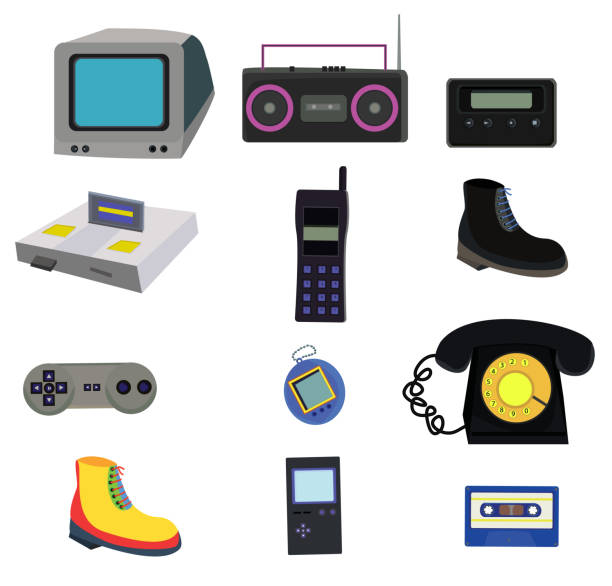
There is a reason your brain lights up when you press a chunky mechanical key or grip a controller shaped like the one you used as a kid. Retro reissues are not just plastic nostalgia. They are a correction. For years, gadgets got thinner, flatter, and more disposable. Laptops traded travel for thinness. Mice became smooth pebbles that vanish under your palm. Controllers became fragile slabs of glossy plastic. The modern throwback movement takes the best old shapes and pairs them with the ports, wireless radios, and sensors we actually need now. That means you can get the feel of 1985 without hunting for a dusty attic find and a pile of adapters.
Mechanical keyboards are the clearest example. The IBM Model M is the grandfather of clicky typing. Its buckling-spring keys sounded like a tiny typewriter and felt like they meant it. You can still buy modern versions from Unicomp, and plenty of smaller brands make boards inspired by that era. The difference is what sits underneath. USB-C, Bluetooth, swappable switches, and programmable layouts are common. You are not stuck with a ten-foot coiled cable and a PS/2 plug. You can connect to a laptop, a tablet, or a phone, then switch between them with a keypress. For someone who writes all day, that matters. A good keyboard reduces finger fatigue and makes typing feel less like tapping a touchscreen. It also tends to be repairable. If a switch dies, you replace it instead of tossing the whole board.
Mice have gone through the same treatment. The Microsoft IntelliMouse was not fancy. It was just comfortable, accurate, and shaped for actual hands. Its return as the IntelliMouse Classic showed that people missed that shape more than they missed the ball underneath. Modern retro mice keep the old silhouette but use optical sensors that track on almost any surface. Some add Bluetooth, USB-C charging, and customizable buttons. Trackballs are back too. A trackball looks like a relic until you use one on a cramped desk or with a sore wrist. You move the ball with your thumb or fingers and leave the mouse body still. That means less arm travel and more desk space. For video editors, spreadsheet warriors, and anyone with a small home office, that old idea is still smart.
Game controllers may be the most fun corner of this trend. Companies like 8BitDo, Retro-Bit, and Hyperkin have turned classic shapes into modern gear. You can buy a wireless controller that looks like a Super Nintendo pad but works with a Switch, PC, or phone. You can get a Sega Genesis-style controller with extra shoulder buttons. You can find N64-style pads with better sticks that will not grind themselves to dust. These are not just for retro games. A simple, well-built controller is great for indie platformers, fighting games, and local multiplayer. It also gives younger players a taste of what older hardware felt like without the blurry CRT and the tangled cables.
The smartest retro reissues share a few traits. They respect the original shape, but they do not worship every limitation. They add modern connectivity. They improve durability. They keep controls simple. They avoid gimmicks. That balance is why they appeal to non-technical people. You do not need to know what a microcontroller is to enjoy a keyboard that feels good or a controller that fits your hands. You just need to plug it in and use it. The nostalgia is a bonus, not the whole product.
There is also a practical angle. Old peripherals were often built to be fixed. Screws, standard parts, and replaceable cables were normal. Many modern throwbacks bring that attitude back. That is better for your wallet and for the planet. Instead of buying a new sealed gadget every two years, you can keep a good keyboard or mouse going for a decade. You can swap a cable, change a switch, or replace a battery. That is not retro for the sake of being retro. It is just good design that happened to be old.
So if you are curious, start with one piece. Try a mechanical keyboard with a layout that matches your computer. Test a retro-style mouse or trackball for a week. Pick up a wireless throwback controller for game night. You may find that the past was not just charming. It was comfortable, repairable, and built for human hands. Modern reissues simply let you enjoy those perks without the adapters, the yellowed plastic, or the eBay bidding war.