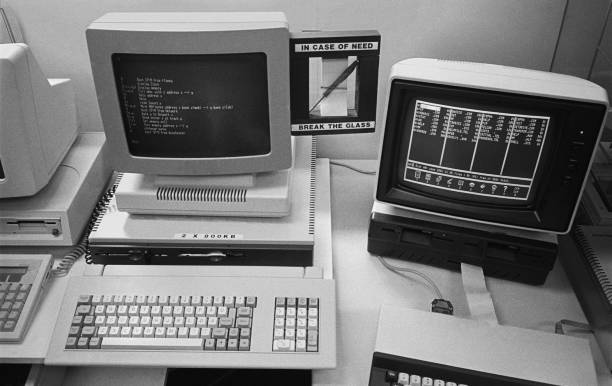
A CRT monitor can look rock solid in a photo and feel like a mild headache in person. That is not your imagination. Older screens draw an image by firing an electron beam across a phosphor-coated glass tube, line by line, many times every second. The image is not really “painted” all at once. It is refreshed in a rapid sweep, and your eyes and brain are surprisingly good at noticing when that sweep is too slow. The result is flicker, a faint pulsing that some people see clearly and others barely register. It is one of the biggest reasons a CRT can feel both magical and exhausting.
Refresh rate is the number to understand. A monitor set to 60Hz refreshes the screen sixty times per second. On a modern LCD that is usually fine because the backlight stays steady and pixels hold their state. On a CRT, the phosphors glow and fade with each pass. At 60Hz, especially on a large screen or with bright white backgrounds, many people can see the flicker in their peripheral vision. It can cause eye strain, headaches, or that weird feeling that the room is subtly throbbing. Push the same monitor to 75Hz, 85Hz, or higher and the image often settles down dramatically. If you are using an old CRT and your graphics card supports it, the single best quality-of-life upgrade is usually a higher refresh rate at a resolution you actually want to use.
This is also why old-school PC users were obsessed with refresh rates in a way that modern buyers sometimes find funny. A 60Hz flat panel is normal. A 60Hz CRT at a high resolution was often a compromise. Games looked smoother at higher refresh rates, but text also became easier to read because the screen stopped visibly strobing. Movies and old video game consoles had their own timing quirks, which is why some content looks better on a CRT than on a crisp modern display. The soft glow, the scanlines, and the slight blur can hide low-resolution artwork in a way that makes it feel intentional rather than broken.
There is a buzz, too. Many CRTs emit a high-pitched whine, especially when displaying certain patterns or when the electronics are aging. Some people hear it; some do not. It can come from the flyback transformer or other components doing their high-voltage work. A healthy monitor may be quiet enough to ignore, while a tired one can be genuinely annoying. If the sound changes pitch suddenly, or if you smell ozone or see arcing, stop using it and have it serviced by someone who knows CRT safety. The inside of a CRT can hold a dangerous charge even after it has been unplugged. This is not a tinker-friendly appliance for casual screwdriver sessions.
Flicker and buzz are not just nostalgia-killing flaws. They are part of why CRTs feel different. The display is physical in a way modern screens are not. You can see the glass curve, the shadow mask or aperture grille, and the way motion smears slightly but often convincingly. Fast-moving games can feel responsive because CRTs have very low input lag and quick pixel transitions. Retro games often look right because the original artists designed for these quirks. A clean, sharp emulator image is useful, but a decent CRT can make old sprite work look warm and cohesive without any filter.
If you want to get the most from an old monitor, start with the boring stuff. Set the highest refresh rate the monitor and cable can handle at a comfortable resolution. Use a good-quality VGA or appropriate adapter, not the cheapest mystery dongle in a drawer. Lower the brightness a little if white screens feel aggressive, and add soft ambient light behind the monitor so your eyes are not fighting a bright rectangle in a dark room. Sit at a sensible distance. Test with a scrolling game, a document, and a plain white screen; your eyes will tell you quickly whether the refresh rate is working for you. Do not chase maximum resolution if it forces the screen down to a flickery 60Hz.
CRTs are not better in every way, and nobody needs to pretend otherwise. They are heavy, hot, power-hungry, and increasingly hard to repair. But when one is set up well, it explains a lot about why people still hunt for them. The flicker, the buzz, and the glow are not bugs from a forgotten era. They are the texture of the technology, and with a little tuning, that texture can still feel great.