Most people do not have a storage problem. They have a retrieval problem. A massive drive full of unsorted files is just a junk drawer with a USB cable. Organization is not about being neat. It is about finding the right file when you are tired, rushed, or trying to finish something before dinner. A good storage organization system works with your lazy side, not against it. It assumes you will not remember where you saved that PDF, so it gives every file an obvious home.
Start with one rule: every file gets a home before it arrives. Create a small set of top-level folders that match your life, not your current project. Work, Personal, Creative, Reference, and Archive are enough for most people. Keep those names stable for years. Avoid making a new top-level folder for every client, hobby, or trip. Those belong inside a broad category. The top level should be boring and obvious. If you have to think about where something goes, your system is too clever.
Inside each top-level folder, use a simple three-tier pattern: area, project, and date or version. A work file might live in Work, then Client Name, then 2025-06-14 Proposal. A personal file might live in Personal, then Taxes, then 2025 Return. Dates should be written as YYYY-MM-DD so they sort correctly without extra effort. Versions should be v01, v02, v03. Avoid words like final, final-final, or latest. They are lies waiting to happen. If you need status, put it in the filename where search can find it.
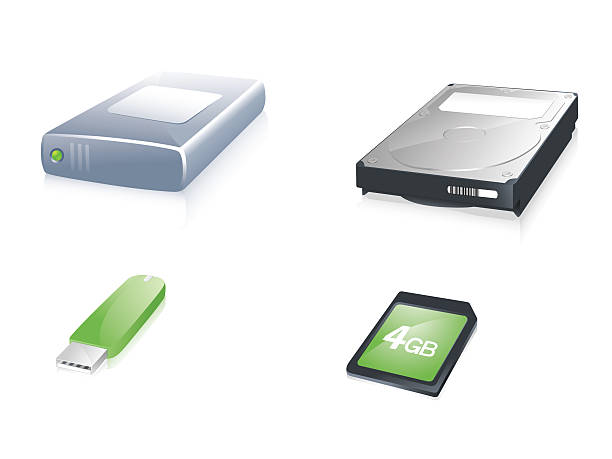
The next step is separating active files, archive files, and backups. Active files are what you touch this month or this season. Archive files are done but worth keeping. Backups are copies, not a category. Do not drag a backup into your archive and call it organized. Active files belong on your fastest drive. Archive files can live on a cheaper external drive, a NAS, or cold cloud storage. Backups belong somewhere else entirely. The old 3-2-1 idea still works: three copies, two different media, and one offsite. You do not need to be a network engineer to follow it.
External drives need labels and a consistent root folder. Do not leave them named My Passport or Untitled. Call them Media Archive 2024, Photos Master, or Game Captures. On every drive, use the same broad folders: Documents, Photos, Video, Audio, Projects, and Archive. That way, moving between drives feels less like opening mystery boxes. If the drive letter changes, the folder names still tell you what matters.
Cloud storage is not a dumping ground. It is a sync layer. Pick one cloud service as your primary home for documents. If you use more than one, give each a clear job. One can handle shared documents, one can handle client handoffs, and one can handle phone photos. Do not keep the same file in three services unless you enjoy version confusion. Duplicates waste space and make you question which copy is real.
Photos and videos need their own system because camera rolls are not storage. Import monthly. Name folders by date and event, like 2025-05-12 Beach Trip. Keep the originals untouched. Use a photo app as a catalog, not as the only place your memories live. Export favorites to a separate folder. For video projects, keep one project folder with subfolders for footage, audio, graphics, and exports. When the project is done, move the whole folder to archive.
Naming conventions matter more than pretty folder trees. Be consistent. Include the date, project, description, and version when useful. A name such as 2025-06-14_article_draft_v02.docx is ugly, but it is searchable. Avoid characters that break cloud sync, including slashes, colons, asterisks, question marks, quotes, and angle brackets. Your future self will care about finding the file, not admiring its name.
Maintenance is the difference between a system and a pile. Schedule fifteen minutes once a month. Process your downloads, desktop, and phone. Move files to their homes. Delete what you do not need. Empty the trash. Check that backups ran. A storage system that is never maintained becomes archaeology. You do not need to organize everything in one heroic weekend. Build a habit instead. Do that, and future you will thank you.