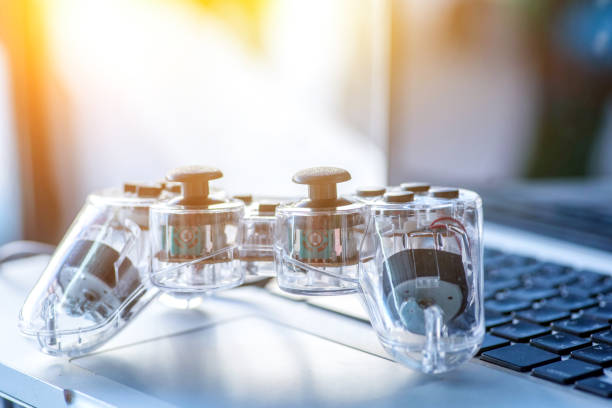
Your thumbs remember the click of a Super Nintendo d-pad before your brain does. That cross-shaped pad, the concave and convex buttons, the chunky cable—these trained a generation to play with precision. Retro gaming controllers are not just plastic relics. They are tools with muscle memory built in. If you grew up with them, picking one up feels like returning to a favorite chair. If you did not, they can still teach you how a good controller should feel.
The first reason old controllers endure is simplicity. Modern gamepads have sticks, triggers, touchpads, speakers, motion sensors, and too many buttons. A classic controller usually has a d-pad, a few face buttons, and maybe shoulder buttons. That constraint is freeing. For platformers, puzzle games, shmups, and 2D fighters, fewer inputs mean faster decisions. You spend less time remembering which bumper does what and more time reacting. That directness is why many indie games still play best with a retro-style pad.
Nostalgia is powerful, but it is not the whole story. Original hardware often had excellent build quality. The Sega Genesis six-button pad, the SNES controller, and the original PlayStation pad were designed to survive enthusiastic kids. Rubber membranes under the buttons gave a soft but definite press. D-pads were tight without being stiff. Many modern budget controllers feel hollow or mushy by comparison. A well-kept original can still feel better than a cheap replica, which is why collectors hunt for them and repair kits sell well.
Using retro controllers today is easier than it used to be. If you want to play emulated games on a PC, a Raspberry Pi, or a mini console, you have options. USB adapters turn original controller plugs into standard USB. Bluetooth adapters and wireless mod kits cut the cord. Companies like 8BitDo and Retro-Bit make modern controllers that imitate classic shapes while adding wireless and USB-C. For non-technical folks, the simplest path is a plug-and-play USB or Bluetooth retro pad. It works like any other gamepad, with no soldering or software wizardry.
If you want the real thing, adapters are your friend. A USB adapter for Nintendo, Sega, or PlayStation controllers is usually a small dongle that needs no drivers. Plug the original controller into the dongle, the dongle into your computer, and the system sees a standard gamepad. Some adapters support multiple controllers. Before buying, check which systems are supported and whether the adapter adds input lag. For casual play, lag is tiny. For competitive fighting games or speedrunning, read reviews and choose wired. Wired remains the most reliable way to avoid latency.
Maintenance keeps old controllers alive. Dust, sticky soda, and worn rubber are the usual enemies. Isopropyl alcohol and a cotton swab can clean button contacts and plastic shells. If a button feels mushy, replacement rubber pads are cheap and easy to install with a small screwdriver. Analog sticks on N64 and Dreamcast controllers may need new sticks or hall-effect mods, which are more advanced but doable. A frayed cable can be replaced. Do not toss a controller just because it feels tired. Many are repairable for less than a new one.
Comfort matters more than authenticity. The N64 trident controller is beloved by some and hated by others because it assumes a specific grip. The DualShock shape works for many hands but not all. If you are buying a retro controller for long sessions, think about your hand size and the games you play. A Genesis pad is great for fighting games. A SNES pad is great for platformers. An arcade stick is great for shooters and fighters. The best controller disappears in your hands. If possible, try before you buy, and favor sellers who accept returns.
Finally, remember why you wanted one. Retro gaming is about fun, not perfection. You do not need the exact controller from your childhood to enjoy a classic game. You need something that feels right and works reliably. A modern retro-style pad might be more practical. An original with an adapter might be more satisfying. Either way, the goal is the same: press start and play. The best retro controller makes you forget the hardware and remember the game.